




Most people set a safe combination once and don’t think about it again until something forces the issue. That’s understandable. A safe sits in place, does its job, and stays out of the way. But the combination controlling access to it is only as secure as the last time anyone thought carefully about who has it. There are situations that clearly call for a change, and others where the case is less obvious but the right call is still to update it. Here’s how to think through it.
The Most Common Reasons to Change a Safe Combination
Some triggers are straightforward. If an employee who had access to your business safe has left, voluntarily or otherwise, and the combination should change before the next business day. If you’re going through a divorce or a household split and the safe contains anything of value, changing the combination is the same reasonable step as rekeying your door locks. If you’ve purchased a used safe or inherited one, there’s no way to know who set the original combination or who else may have it. Changing it is the only way to know you’re the only one with access.
Other situations are less dramatic but equally valid. A combination that uses a predictable number like a birthday or phone number should be updated. A factory default code that was never changed is a common and easily addressed vulnerability. And if the combination simply feels hard to remember and you’ve been writing it down somewhere obvious, it’s worth resetting to something you can reliably recall without creating a paper trail.
Mechanical Dial vs. Electronic Keypad: Different Processes
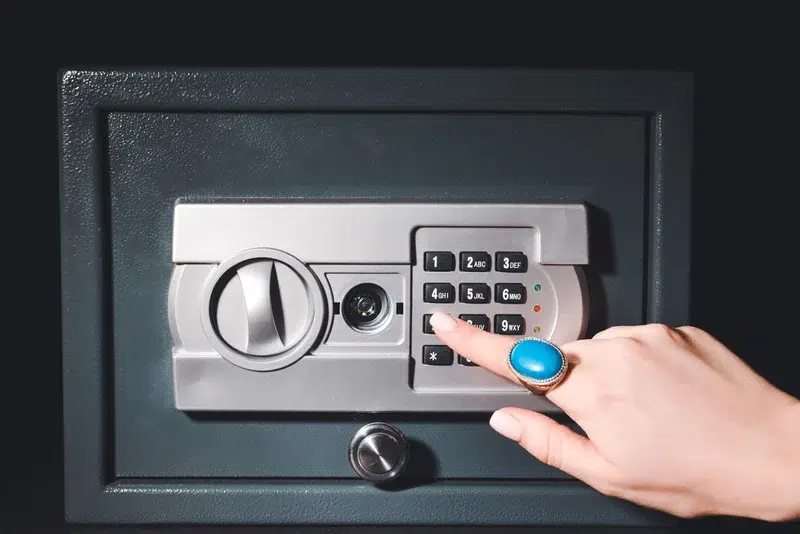
How a combination change works depends on the type of lock your safe uses. Electronic keypad locks are designed to be user-changeable. Most models have a straightforward programming mode: you enter the existing code, follow a button sequence, and set the new one. The manufacturer’s instructions cover the specific steps, and the process doesn’t require a locksmith unless you’ve forgotten the current code or the keypad is malfunctioning.
Mechanical dial locks are different. Changing the combination on a dial lock requires a change key, a separate tool that physically engages the lock’s internal mechanism, along with a specific procedure that varies by lock manufacturer. Getting it wrong can leave you locked out of a safe that was working fine before you started, and attempting the process without the right key or experience can damage the lock. For mechanical dial safes, a professional combination change is the right call. It’s not a complicated job for a trained locksmith, and it’s far less expensive than the alternative of having a safe drilled because a DIY attempt went sideways.
When Forgetting the Combination Becomes the Reason
It happens more often than people admit. A safe that doesn’t get opened frequently is easy to lose track of. The combination gets set, life moves on, and six months later there’s no reliable memory of what it was. If you still have access to the safe, meaning you can open it, and a combination change while the door is open is the right solution. A locksmith can set a new combination you’ve chosen, verify it works, and close the door with confidence that everything is functioning correctly.
If you’ve already lost access and can’t open the safe, that’s a different service. A safe unlocking job comes first, and a combination change can follow once the door is open. Doing the change with the door open isn’t a formality. It’s the only safe way to verify the new combination works before you close it.
What a Professional Combination Change Involves
When we arrive for a combination change, we start by confirming the safe is accessible and open. For a mechanical dial lock, we use the appropriate change key for the lock model, set the new combination to your specification, and cycle through it several times to confirm it engages consistently. For an electronic lock where the keypad itself has failed or the code is unknown, we access the lock’s programming mode using authorized override procedures and reset the code. Either way, we test the new combination before we leave. You close and open the safe with the new combination in front of us before we call the job done.
All safe work is handled on-site through our safe locksmith service. The safe doesn’t need to be moved or transported. If you know the make and model of your safe, sharing that when you call helps us confirm we have the right tools before heading out.
Business Safes: Why Timing Matters
For businesses, the right time to change a safe combination is the same day a staff member with access departs, not the following week. The gap between an employee leaving and the combination changing is a period of genuine exposure, and this is especially true for retail operations, restaurants, and any business where cash handling involves a safe that multiple staff members know how to open. High-turnover businesses benefit from putting a regular combination change schedule in place rather than waiting for a departure to trigger it.
If your business is in Fredericksburg, Spotsylvania, Stafford, Culpeper, or Thornburg and you need a safe combination change handled quickly, FXBG Keys LLC is fully licensed and insured and provides mobile service throughout the region. Contact FXBG Keys LLC and we’ll schedule a time that works, or come to you promptly if the situation calls for it. FXBG Keys LLC is available Monday through Saturday, 9am to 9pm, with emergency service outside those hours.