




Electronic Safe Keypad Installation
Need an Electronic Safe Keypad? FXBG Can Help
Two situations bring most people to this page. The first is a keypad that’s stopped working, buttons that don’t respond, a display that’s gone dark, or a code that simply won’t open the safe anymore. The second is a safe that still has a mechanical dial when the owner would prefer the speed and convenience of electronic access. Either way, the safe stays where it is and we come to it.
FXBG Keys LLC installs and replaces electronic safe keypads for homes and businesses across Fredericksburg, Spotsylvania, Stafford, Culpeper, and Thornburg, Virginia. We work Monday through Saturday with emergency service available when access genuinely can’t wait. Our broader safe locksmith services cover the full range of safe work, from keypad installation to unlocking and combination changes.
How Electronic Safe Keypads Work
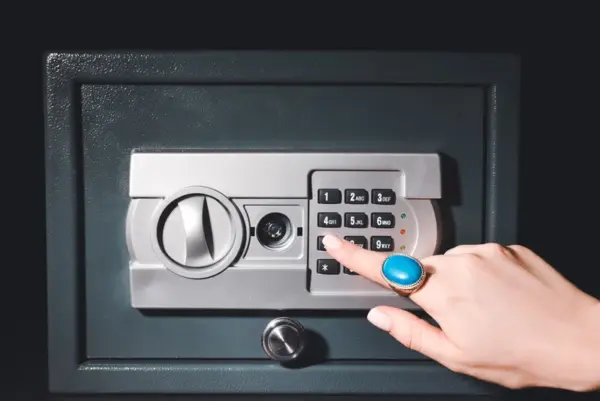
We can repair and replace electronic keypads for most brands, types, and sizes of safes for home and business use, including small fireproof safes (as shown), gun safes, and depository safes for retail shops.
An electronic safe uses two separate components. The keypad on the door face is where you enter your code. It reads your input and sends a signal to the lock body mounted inside the door. The lock body is the mechanical part that actually throws and retracts the bolt. When the correct code is entered, the lock body motor activates, and the bolt retracts. When the wrong code is entered, it doesn’t. Most electronic safe locks run on 9-volt or AA batteries and are rated for thousands of openings per charge.
One thing worth knowing: the combination is stored in the lock body, not the keypad. A dead battery doesn’t erase your code. It just means the lock body has no power to respond. Most keypads signal a low battery well before it fails completely, giving you time to replace it without a lockout. A wrong-try penalty is also standard in most models. After a set number of incorrect code attempts, the lock delays subsequent attempts for a period of time, a standard anti-tampering feature.
When You Need a New Keypad
Electronic keypads don’t last forever. The most common reasons to replace one are:
- The keypad has failed, buttons are unresponsive, the display is dead, or the unit doesn’t signal at all when buttons are pressed
- A code has been compromised, an employee departure, a security concern, or a situation where you need certainty about who has access
- Physical damage from impact, moisture exposure, or wear that has made the keypad unreliable
- Upgrading from a mechanical dial to electronic access for ease of use or to allow multiple user codes
In most of these cases, a replacement keypad or a full lock body swap resolves the issue cleanly. The exception is when the safe itself has been damaged or tampered with in a way that affects the bolt work. That’s a different job, covered under our safe lock repair service.
Keypad Only vs. Full Lock Replacement
Not every keypad failure means the entire lock needs to come out. Sometimes, just the keypad faceplate has failed while the lock body inside the door is still functioning correctly. In those cases, swapping just the faceplate restores operation at lower cost. Other times the lock body itself has failed, motor problems, damaged internals, or a unit that’s simply reached the end of its service life, and the full lock assembly needs to come out and be replaced.
Compatibility is the key constraint here. Keypads and lock bodies need to be compatible with each other and with the safe’s door configuration. Safe manufacturers use different mounting configurations, spindle sizes, and wiring connections across their product lines. When you call, having your safe’s make and model ready lets us confirm the right hardware before we arrive rather than making a second trip.
Programming and Setup
Installing the hardware is only part of the job. Once the new keypad and lock body are in place, the system needs to be programmed. The new lock will support a manager code and one or more user codes. Depending on the model, you can also configure:
- Time delay: a required waiting period between code entry and bolt retraction, useful for cash safes where immediate access shouldn’t be possible
- Wrong try penalty: how many incorrect attempts are allowed before the lock delays further entries
- User code enable/disable: turning specific user codes on or off without changing the master code
We program the lock to your specifications during the installation visit and walk you through operating the new system before we leave. If you need to add or remove user codes later, most systems allow you to do that yourself using the manager code. For a full combination change on an existing electronic lock without replacing any hardware, our safe combination change service handles that as a standalone job.
Get Help With Your Safe on Your Schedule
Whether your keypad has failed, your code has been compromised, or you’re ready to move from dial to digital, we come to your location with the tools and parts to handle the installation properly. FXBG Keys LLC is fully licensed and insured, serving homeowners and businesses throughout Fredericksburg, Spotsylvania, Stafford, Culpeper, and Thornburg. Have those details ready when you call. Contact FXBG Keys LLC, and we’ll confirm what your safe needs before we head out.
Electronic Safe Keypad FAQs
Will replacing the keypad erase my combination?
No. The combination is stored in the lock body, not the keypad. Replacing the faceplate alone leaves everything inside the door untouched. If the entire lock assembly is being swapped out, the codes will need to be reprogrammed, and we handle that as part of the installation.
Can any electronic keypad fit my safe?
No. Keypads and lock bodies need to be compatible with each other and with the safe’s door configuration. Mounting hole patterns, spindle sizes, and cable connections vary across manufacturers and model lines. We identify the correct compatible hardware for your specific safe before arriving, so there’s no guesswork on the day of the job.
What happens if the battery dies? Will I be locked out?
Most keypads give low battery warnings well before the battery fails, typically a series of beeps after each code entry. If the battery does die completely, most electronic safes have an external battery terminal on the keypad face that lets you temporarily connect a fresh 9-volt battery to power the unit and open the safe. We can show you where that is on your model during the installation visit.
What's a wrong try lockout?
After a set number of incorrect code attempts, typically three to five depending on the lock model, the lock stops accepting entries for a fixed period, usually a few minutes. This prevents someone from systematically trying codes to guess the combination. It’s a standard feature on most electronic safe locks and can be configured during programming.
Can you upgrade my mechanical dial safe to an electronic keypad?
In many cases, yes. Most safes that use a standard mechanical combination lock can be converted to an electronic lock if the door is configured to accept one. The process involves removing the dial and mechanical lock and installing a compatible electronic lock body and keypad in its place. We assess compatibility when you call with the safe’s make and model and confirm whether the conversion is possible before scheduling the work.